

A final interview with Pini Leibovich and Yiftach Zdafee at the conclusion of the semester at the Design Lab.
A final interview with Pini Leibovich and Yiftach Zdafee at the conclusion of the semester at the Design Lab. We meet to sum up the extraordinary semester in which we were the hosts and premises, and first year Industrial Design students and lecturers from Shenkar College of Engineering and Design were the guests, the artists, and the life and soul of the activity behind the inanimate objects.
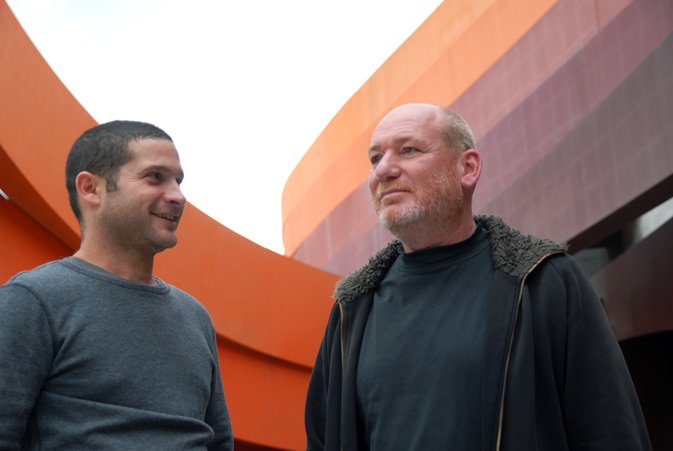 Pini Leibovich and Yiftach Zdafee; Photos: Shay Ben-EfraimEvery Wednesday for three months the Museum was filled a special, different kind of activity. The students – complete strangers – gradually became familiar faces. Every Wednesday the daily routine at the Museum was interrupted, and we were afforded a glimpse into a world that is usually hidden from us. Together with the students we watched films, listened, became acquainted, observed, and looked. Before our very eyes mute craft-board took on new life, before our very eyes it began to move and spread, shrink and grow.With the end of the semester and the return – them back to the college, and we to a different kind of hosting – we met with Pini Leibovich and Yiftach Zdafee. A time for summing up.
For your final lesson you went to visit the Zik Group Studio; beyond the liberating experience, was it important?Very much so. Students don’t usually get the opportunity to experience an encounter with a studio, and it’s something that’s missing for them. Suddenly they find themselves going on a tour of a foundry. They meet with the foundry-man and observe the process from the moment the artist brings his sculpture and until he receives the finished product. It’s a rare experience. And another thing, one of the things students are always saying is that they don’t have any free time because their schedule is so restrictive. And I say to them: Freedom isn’t something you receive, freedom is something you take. When they hear Sharon’s* stories about the difficulties along the way, they understand. It’s a very important trip in this period of time. Most of the young people who choose to study design do so because it’s a profession you can earn a living from, and the place Sharon presents is a place of questioning. What is a circle? What are the materials? Let’s examine them. It’s a direct continuation from there to an entire semester in which we talk about Form Follows Function. It’s another way to explain it without explaining it. *Sharon Keren, head of the Department of Jewelry Design at Shenkar and a founding member of the Zik Group.So how would you summarize the time you spent here? How was it?We came here after three years of preparation during which the course was held at Shenkar. It was good because we based ourselves on the insights and learning sequence of those years. It should be borne in mind that it was not we who chose the Lab. Galit Gaon chose us. She was familiar with the course we gave and invited us to do something similar at the Museum.
 And the dynamic, was it different?The place itself has a very strong presence. The ordered space, the exhibition, the courtyard, the very act of entering the Museum. This encounter unquestionably influenced the products. The question is, why do we need a high-quality space? Is there really a difference between it and an inferior one? The high-quality space paves the way for a different kind of product. We saw that here. Even in the way the works were brought here, and the exhibition held in the space each week. The students felt a need to do good work because they knew the works would remain here for a whole week, and strangers visiting the Museum would be seeing them. At Shenkar, the works aren’t usually exposed. Sometimes students from the higher classes come to look at them because they’re curious to see what the first-year students are doing. They peek inside, and try to remember what they were like. But here, the encounter is direct.What were reactions like on Saturdays, when the students served as guides?The reactions were fascinating. Because the Lab space is a place were things are created, you can see objects in the making and it enables people to talk freely. The students received a lot of advice, and people were exposed to the processes. The existence of the Lab facilitates intervention from people, which is something the Museum doesn’t.
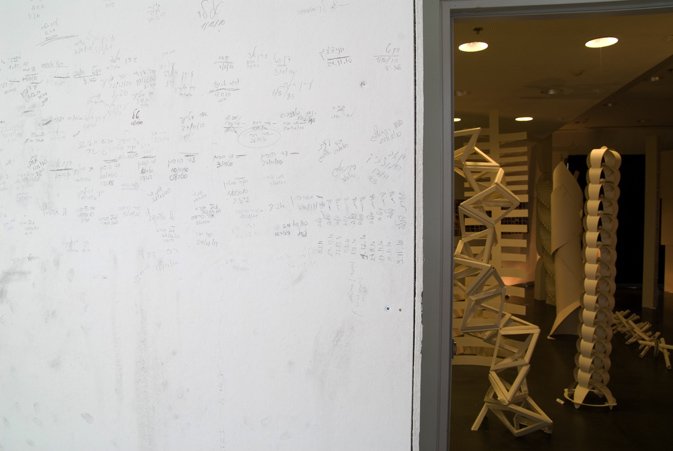 At the entrance to the Design Lab: A wall on which the students marked their height and added their signature in their first lesson as Museum. (Click here for the first lesson at the Lab)
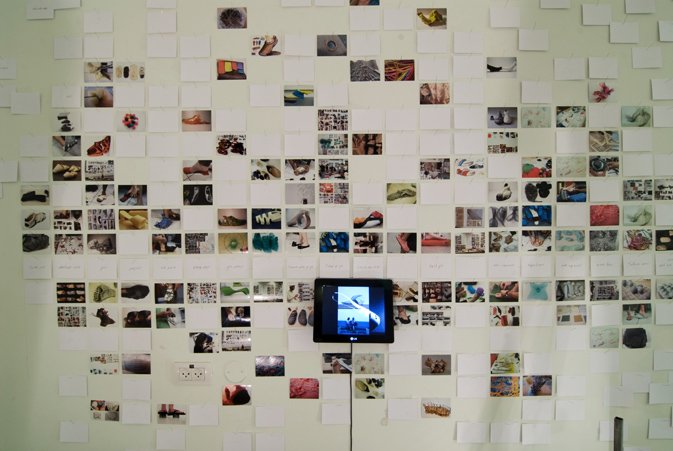
Isn’t it too early to expose first-year students in their first semester? Aren’t they supposed to undergo some kind of incubation period first?It was certainly an issue the two of us discussed. There were also a lot of raised eyebrows from colleagues who heard about the Lab. But we earned our time here honestly. The materials according to which we were chosen to be the first lab were relevant. The choice was based on results presented. There was no way of knowing that these were first-year students. The results were timeless and they reflect the absence of hierarchy and the ability to examine things as they are. And another thing, since our department at Shenkar is a young one and has no documentation, there’s a sense of a lack of continuity. Continuity creates a connection to the place where a person is. So we had to base ourselves on what’s happening now – we’re teaching the students to take pictures, not document. And they take pictures and collect, and then what you have is documentation.
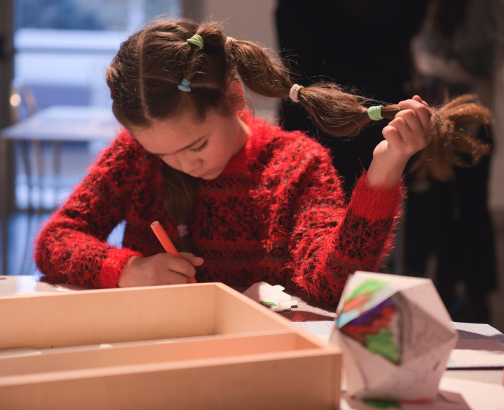
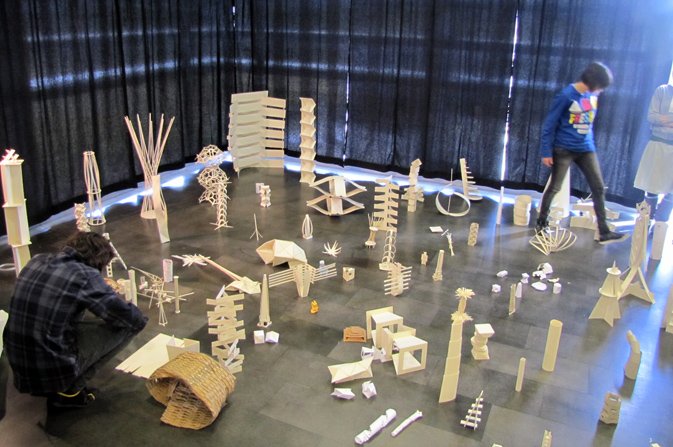 From the lesson before last at the Design Lab (click here to read the entire lesson); Photo: Irit Lanciano
What’s the difference?When you’re asked to document, it usually attests to the end of the process, and the documentation is intended for a particular purpose. When you’re asked to take a picture of a work and hang it on the wall, a continuous learning process is created whereby the students understand what they’re doing. Because we were unable to contend with documentation, because it’s a big word, we had to look for a way to make people document without documenting. We also realized that here in Israel there isn’t a linear sequence of learning one thing over time, especially in the field of design. Because we’re growing up in a place where the dynamic is frenetic and attention divides rapidly, and there’s no tradition of learning and focusing on one thing, and since most of the students don’t bring it with them from their home – the ability to speak about hues and flavors – we realized that we had to create a sequence of events in the space in order for this one thing to eventually be created here. That by speaking about many things that are connected to the subject, by creating multiple experiences, an understanding of the one is achieved from the sum total of experiences. It’s an understanding in retrospect and which aims to endow us with higher qualities. At the end of the day, a method was created here that is highly suited to the place we live in. Breaking the traditional way of learning design. And as a result the quality of the department is improving all the time.Does it influence the way you choose students?Nowadays we accept students to the department who don’t necessarily possess three-dimensional perception; some are accepted because they’re interesting. What makes someone interesting? The way in which you see, gather, place. In my experience, people who are interested in more things can introduce additional parameters to the world of design, not just three dimensions.
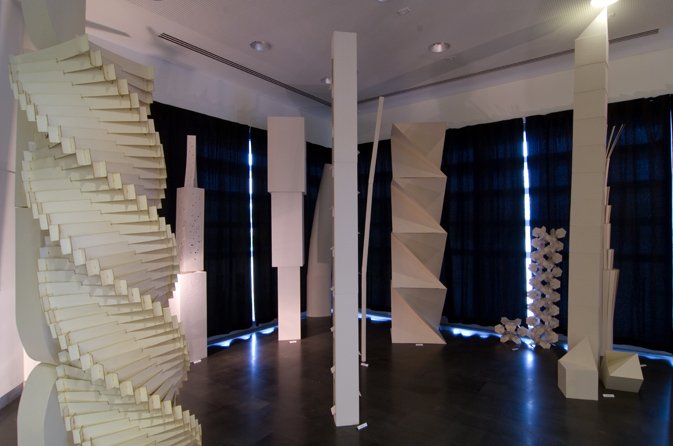 The final semester projects
Is the ability to tell a story a two-dimensional tool or a three-dimensional one?The ability to tell a story is a tool. The ability to convey the conceptual abstract of the object is part of the reduction. If they can reduce and abstract, they can do it with material as well. If someone can create clear situations that cleverly convey a conceptual message, then the transition to material will be made accurately. It may only happen in their third year, but it’s part of the toolbox that helps them to reduce and become accurate.Would you continue for a second semester?Three months were enough. It was the right amount of time for this project and at this time. It was draining. What is needed now is intimacy, to go inward. We can say, however, that something amazing happened in the end. The direct encounter of the visitors with the works was exciting. When you manage to create desirable objects, the kind people want to possess, it’s interesting. And that’s what happened with the final projects we presented at the end of the semester. At the same time, it must be borne in mind that this is only the first year. This was a fleeting exposure, and there’s still a long way to go to attain qualities. We managed to create a window here that opened and then closed, and there’s still a lot more to learn.Click here to read the Design Blog following the entire semester at the Design Lab.